Billing mistakes happen more often than most people expect, and incorrect charges can show up across nearly every industry, including retail, travel, utilities, subscriptions, healthcare, and telecommunications. A duplicate charge on a hotel bill, a subscription that renews after cancellation, or a delivery fee that was never disclosed at checkout are all common examples. Understanding consumer rights, and knowing the right steps to take, makes it far easier to correct these problems without unnecessary stress or wasted time.
What Are Incorrect Charges?
Incorrect charges refer to any amount billed to a consumer that does not match what was agreed upon, advertised, or authorized. These errors can be small, such as a few extra dollars in tax, or significant, such as a payment processed twice for the same order.
Common examples include:
- Duplicate charges for a single purchase
- Unauthorized transactions the consumer never approved
- Incorrect pricing that does not match the advertised amount
- Hidden fees added without clear disclosure
- General billing errors caused by system or human mistakes
- Charges that continue after a service was canceled
- Incorrect subscription renewals billed at the wrong rate or date
- Wrong invoice amounts on business or service accounts
Common Reasons Companies Charge Customers Incorrectly
Most incorrect charges are not intentional. Understanding the underlying cause can help consumers decide how to approach a dispute.
- Human error: A staff member enters the wrong amount or applies the wrong code.
- System glitches: Payment platforms occasionally double-process transactions or misapply discounts.
- Subscription renewals: Automatic renewals sometimes bill at a new rate without clear notice, or continue after a cancellation request was submitted.
- Merchant processing mistakes: Payment processors can batch or resend transactions incorrectly.
- Pricing discrepancies: In-store or online prices may not match what is programmed into the checkout system.
- Technical failures: Website or app errors during checkout can create duplicate orders or incorrect totals.
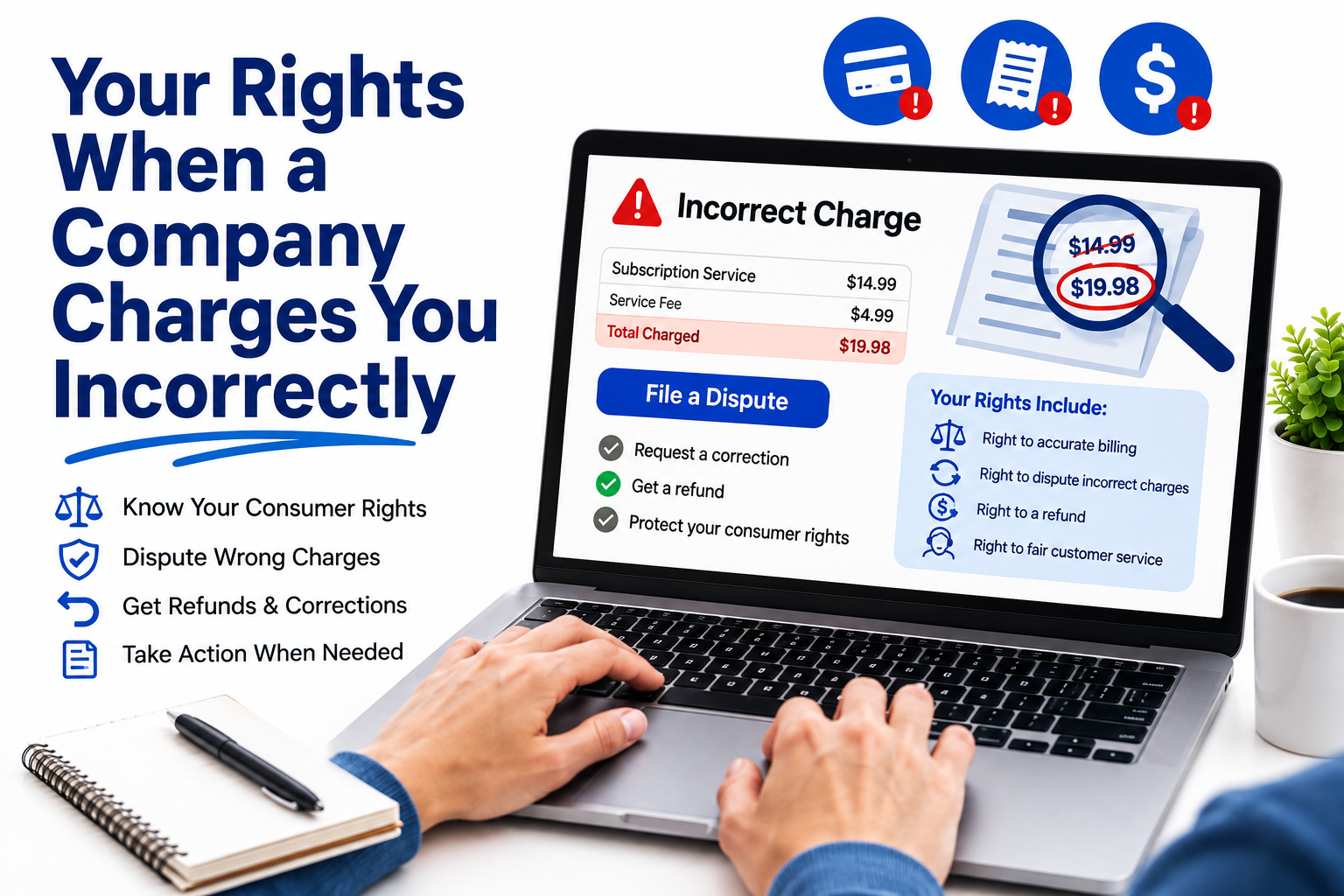
Your Rights When a Company Charges You Incorrectly
Consumers are not without recourse when a company bills them incorrectly. Several practical rights generally apply, though the specific protections available can vary depending on the payment method, the merchant, and applicable state or federal law.
Right to Review Billing Information
Consumers have the right to request a clear, itemized breakdown of any charge on a statement or invoice.
Right to Request Billing Corrections
When an error is identified, consumers can ask the business to correct the amount and issue an updated receipt or invoice.
Right to Receive Accurate Pricing
Businesses are generally expected to charge the price that was advertised or agreed upon at the time of purchase.
Right to Dispute Eligible Charges
Under the Fair Credit Billing Act, credit card users have a formal path to dispute certain billing errors, including unauthorized charges and math mistakes on a statement. Debit card and other payment disputes are handled through separate processes, since protections and timelines differ by payment method.
Right to Fair Customer Service
Consumers can expect businesses to respond to billing questions and complaints in a reasonable and professional manner.
Right to File a Consumer Complaint
Unresolved billing issues can be reported through consumer complaint platforms or relevant regulatory agencies to create a documented record of the dispute.
How to Handle Incorrect Charges
Step 1: Review Your Receipt or Statement
Compare the charge against the original receipt or order confirmation. Check the amount, date, merchant name, and description carefully, since small mismatches often point to the source of the error.
Step 2: Gather Supporting Evidence
Strong documentation makes any dispute easier to resolve. Useful records include:
- Receipts and order confirmations
- Screenshots of pricing or checkout pages
- Email correspondence with the business
- Bank or credit card statements showing the charge
- Chat transcripts from customer service conversations
Step 3: Contact the Business
Reach out to customer support promptly and explain the billing issue clearly. State the amount that was charged, the amount that should have been charged, and the correction or refund being requested. Keep a written record of every conversation, including names, dates, and reference numbers.
Step 4: Escalate the Matter
Unresolved issues can be escalated to a supervisor, a billing department, or a corporate customer relations team when frontline support is unable to help. Escalation often moves faster when previous communication has been documented clearly.
Step 5: Contact Your Credit Card Issuer or Bank
When a business does not correct an error, a billing dispute or charge dispute with the credit card issuer or bank may be appropriate. Chargebacks and dispute procedures vary by payment provider, and eligibility often depends on how long ago the charge occurred and what documentation is available.
Step 6: File a Consumer Complaint
When direct contact and payment provider disputes do not resolve the issue, filing a complaint through a consumer complaint platform or a relevant regulatory agency can help create a public record and encourage the business to respond.
Common Billing Mistakes Consumers Should Watch For
- Double billing for a single transaction
- Hidden fees that were not disclosed at checkout
- Subscription renewals billed after cancellation
- Incorrect tax calculations
- Unexpected service charges
- Unauthorized add-ons bundled into a purchase
- Incorrect shipping or delivery charges
Comparison Table
|
Billing Problem |
Recommended Action |
|
Duplicate Charge |
Contact merchant and review statements |
|
Unauthorized Charge |
Notify bank immediately |
|
Wrong Price |
Compare receipt with advertised price |
|
Subscription Renewal |
Review cancellation records |
|
Incorrect Invoice |
Request corrected invoice |
|
Hidden Fee |
Ask for itemized explanation |
Tips to Avoid Incorrect Charges
- Review receipts before leaving a store or completing checkout online.
- Monitor bank and credit card statements regularly for unfamiliar charges.
- Save purchase confirmations and order emails.
- Read cancellation and subscription policies before signing up.
- Set reminders ahead of recurring subscription renewal dates.
- Keep records of customer service conversations, including names and case numbers.
How RaiseAComplaint.com Can Help
RaiseAComplaint.com gives consumers a place to document billing disputes and share their experiences with incorrect charges in detail. Submitting a complaint creates a written record of the issue, including dates, amounts, and communication history, which can be useful when following up with a business. The platform also helps other consumers recognize recurring billing problems at a company before making a purchase. While RaiseAComplaint.com cannot guarantee a refund or a specific outcome, it encourages constructive communication between consumers and businesses and gives billing disputes public visibility.
The Bottom Line
Incorrect charges can happen to anyone, and knowing how to respond makes a meaningful difference in how quickly they get resolved. Reviewing statements regularly, acting quickly after spotting a billing error, and keeping thorough documentation all strengthen a consumer's position when requesting a correction. Understanding these rights, communicating professionally with businesses, and using trusted complaint channels when needed can turn a frustrating billing mistake into a resolved issue. How to Raise a Complaint About a Streaming Service
Frequently Asked Questions
What should I do if a company charges me incorrectly?
Start by comparing the charge to your receipt or order confirmation, then contact the business directly with the details. Request a correction or refund in writing, and keep a record of the conversation in case further escalation becomes necessary.
Can I dispute an incorrect charge with my bank?
Yes, most banks and credit card issuers offer a formal dispute process for unauthorized or incorrect charges. The process, required documentation, and eligibility windows vary by card issuer and payment method.
How long do I have to dispute a billing error?
Time limits vary by payment provider and type of error. Credit card disputes under the Fair Credit Billing Act generally need to be raised within 60 days of the statement showing the error, so acting quickly is important.
What evidence should I keep?
Useful evidence includes receipts, order confirmations, screenshots, bank statements, and written correspondence with the business. Chat transcripts and emails documenting your cancellation or purchase request are also valuable.
Can I request a refund for an incorrect charge?
Yes, consumers can request a refund directly from the business when a charge is wrong. Refund eligibility and timelines depend on the merchant's policies and the type of error involved.
What is the Fair Credit Billing Act?
The Fair Credit Billing Act is a federal law that gives credit card holders a formal process for disputing certain billing errors, including unauthorized charges and incorrect amounts, on their credit card statements.
What happens if the business refuses to correct the error?
When a business will not resolve an incorrect charge, consumers can escalate to a supervisor, dispute the charge with their bank or card issuer, or file a complaint through a consumer complaint platform or regulatory agency.
Can I report a company for repeated billing mistakes?
Yes, consumers can report a pattern of billing errors through consumer complaint platforms and relevant regulatory agencies, which helps document the issue and may prompt a business to review its billing practices.