Filing a consumer complaint sounds simple enough, but the truth is that most complaints in the United States go unresolved — not because consumers don't have rights, but because the complaint itself is easy to ignore. It's too vague. Too emotional. Missing key evidence. Or filed through the wrong channel entirely. How to File an Effective Consumer Complaint
The difference between a complaint that gets shelved and one that generates a real response almost always comes down to how it's structured. A clear, factual, well-documented complaint gives a company very little room to dodge.
What Is a Consumer Complaint?
A consumer complaint is a formal communication from a customer to a business — or to a government agency or third-party platform — expressing dissatisfaction with a product, service, or business practice and requesting a specific resolution.
In the United States, consumer complaints are a recognized part of the consumer protection system. Agencies like the Federal Trade Commission (FTC), the Consumer Financial Protection Bureau (CFPB), and state Attorneys General offices collect and act on consumer complaint data to identify patterns of fraud, deception, or unfair business practices.
Consumers commonly file complaints about:
- Defective or damaged products that weren't replaced or refunded
- Subscriptions that continued billing after cancellation
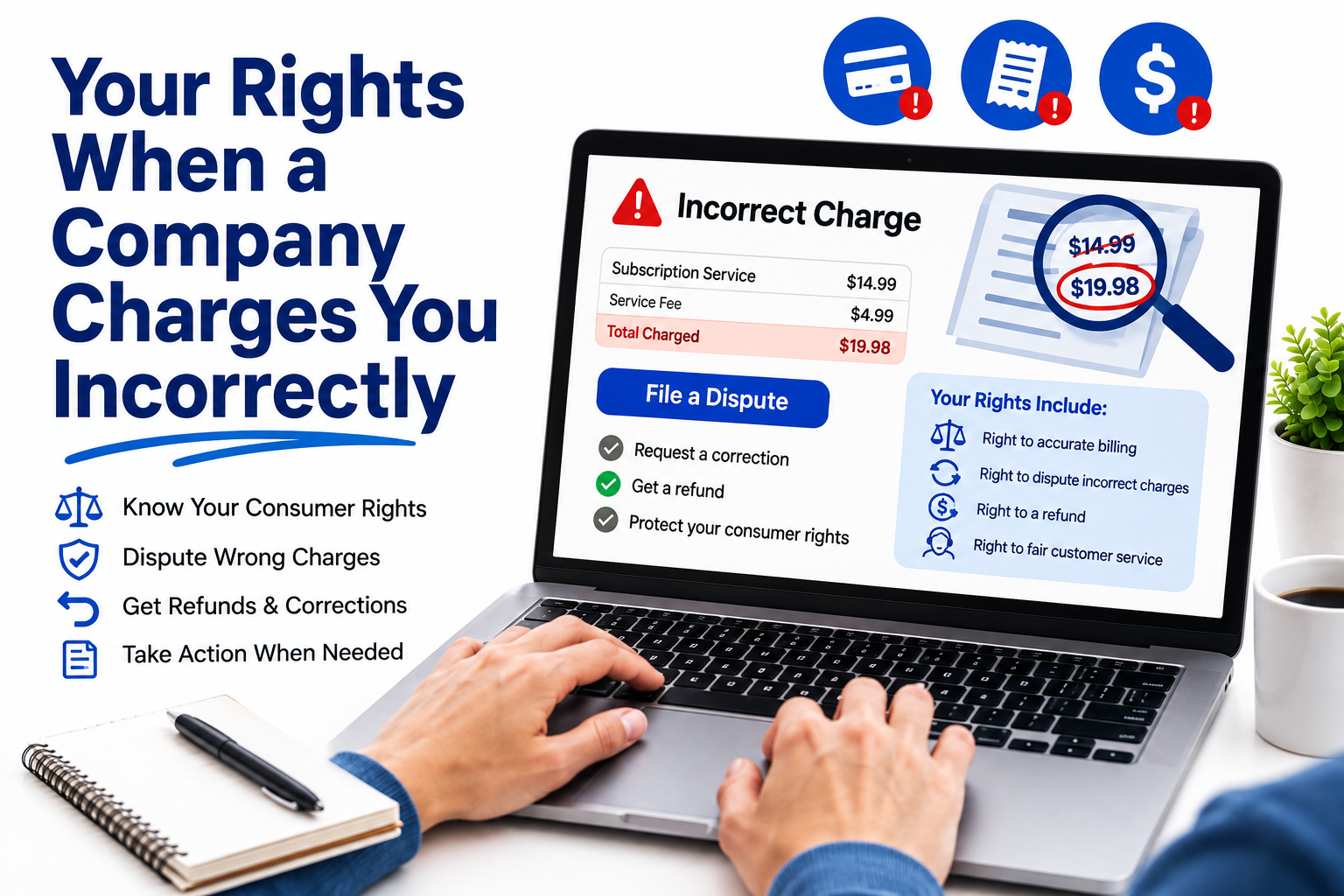
- Unauthorized or unexpected charges on bank and credit card statements
- Online purchases that never arrived or were misrepresented
- Airlines, hotels, or travel platforms that didn't honor bookings
- Telecom or internet providers with billing errors or service failures
- Banks and lenders engaged in unfair or deceptive practices
- Warranty claims that were denied without justification
Your complaint matters — not just for your own situation, but because regulators and consumer advocates track complaint volume to identify which companies need scrutiny.
Why a Well-Written Complaint Gets Better Results
Customer service representatives handle dozens — sometimes hundreds — of complaints every shift. A poorly organized complaint is easy to categorize as low-priority or close with a generic response.
A well-written complaint is harder to dismiss for several reasons:
- It's specific, which means the company can't claim they don't know what the issue is
- It's documented, which means there's a paper trail they'd have to address directly
- It's professional, which signals you understand the process and aren't going away
- It references a clear resolution, which gives the company something actionable to respond to
Businesses also know that a structured complaint from someone who clearly understands their rights is more likely to end up on a regulator's desk or a public complaint platform if left unresolved. That changes the calculus.
Step-by-Step Guide to Filing an Effective Consumer Complaint
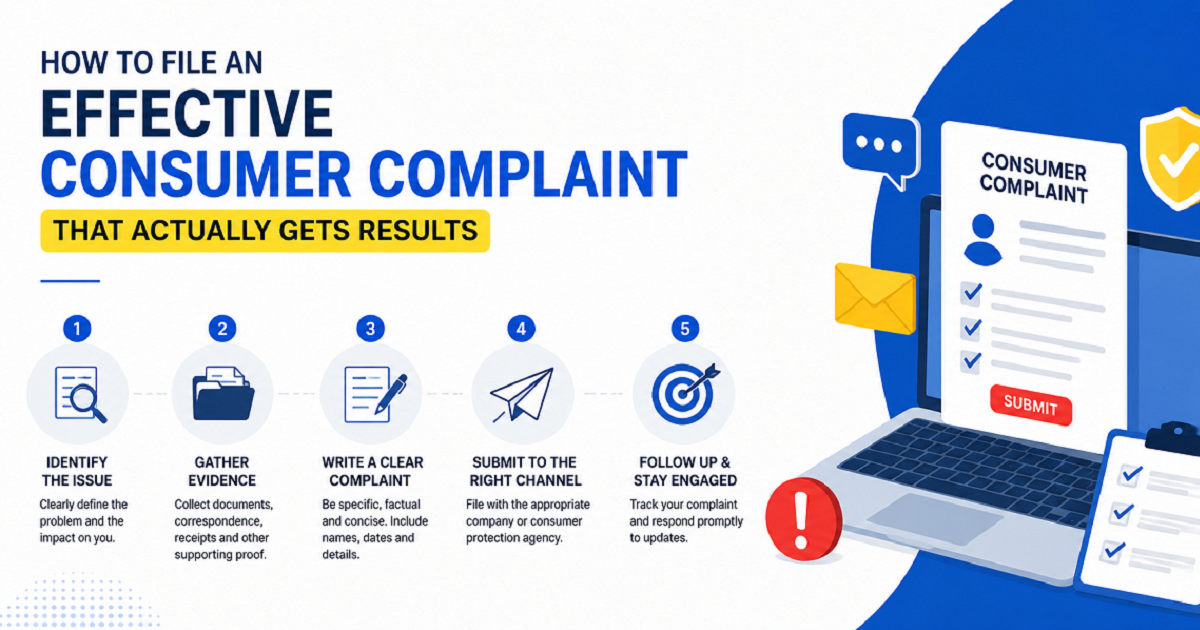
Step 1: Gather All Relevant Evidence Before You Write Anything
Before drafting a single sentence, pull together every piece of documentation you have:
- Receipts and invoices — digital or physical, with dates and amounts
- Order confirmation emails with order numbers
- Screenshots of product listings, advertisements, pricing pages, or subscription terms
- Photos or videos of defective, damaged, or incorrect items
- Email and live chat transcripts with customer service
- · Bank or credit card statements showing the disputed charges
- Reference numbers or case IDs from previous calls or contacts
Never send originals. Make copies and keep everything organized.
Step 2: Build a Timeline of Events
Write out exactly what happened, in chronological order. This is the backbone of your complaint and it's what separates a strong complaint from a vague one.
Step 3: Clearly Identify the Specific Issue
Be precise. Avoid general language like "your service is terrible" or "I was very disappointed."
One clearly defined issue is stronger than three loosely described problems. If you have multiple complaints, prioritize the most significant and address others in numbered follow-up points.
Step 4: Describe the Impact on You
This gives your complaint real weight. Agencies and companies respond differently when they understand the tangible harm caused.
Financial loss, time loss, and safety implications are all worth documenting clearly.
Step 5: State Exactly What Resolution You Want
Vague complaints get vague responses. Be specific:
- A full refund of $[exact amount]
- A replacement product shipped within [X] days
- Cancellation of all future charges with written confirmation
- Removal of a negative credit report entry
- A formal written response explaining the company's decision
Your request should be proportionate to the issue. Asking for a $200 refund on a $200 item is reasonable. Demanding $5,000 in damages over a delayed Amazon package is not — and it gives the company grounds to dismiss you.
Step 6: Contact the Company Through Official Complaint Channels
Always try to resolve directly with the business first. Most regulatory agencies in the US require that you've made a good-faith attempt at direct resolution before they'll escalate on your behalf.
Find the company's:
- Dedicated complaints email or web form (not just general customer service)
- Official mailing address for formal written complaints
- Customer relations or executive resolution team (different from frontline support)
Use written communication: Phone calls are useful, but email creates a paper trail. If you do call, send a follow-up email immediately afterward summarizing what was discussed and what was promised.
Step 7: Follow Up Professionally
Most US businesses aim to respond within 5–10 business days. Two follow-ups spaced 7–10 days apart is reasonable before escalating externally.
How to Write a Complaint Letter That Gets Attention
A strong complaint letter or email follows a clear structure. Here's a format that works:
- Subject line: Formal Complaint — [Brief Description] — Order/Account #[Number]
- Opening paragraph: State who you are, what you purchased, and when.
- Second paragraph: Describe exactly what went wrong and when. Reference your timeline. Be factual.
- Third paragraph: Explain the impact — financial, time, safety, or otherwise.
- Fourth paragraph: State what resolution you are requesting and by what date.
- Closing: Reference the documents you're attaching. State that you expect a written response within 14 business days, and that you will escalate to the appropriate agencies if the matter is not resolved.
Practical formatting tips:
- Keep it under one page (under 400 words in the body)
- Use bullet points to break up timelines or lists of charges
- Avoid caps lock, exclamation points, and emotional language entirely
- Attach — don't embed — supporting documents
- If mailing physically, send via USPS Certified Mail with return receipt
When and How to Escalate a Consumer Complaint in the US
If the company hasn't resolved your complaint after reasonable follow-up, here's how to escalate effectively.
Request a Supervisor or Manager
Before going external, ask to escalate within the company. Request to speak with a senior customer relations representative or manager. Document their name and what was discussed.
File with a Federal or State Agency
Depending on your situation, file with the agency that covers that industry:
|
Agency |
Who They Cover |
|
FTC (reportfraud.ftc.gov) |
Fraud, deceptive practices, identity theft, most businesses |
|
CFPB (consumerfinance.gov/complaint) |
Banks, credit cards, mortgages, debt collectors, payday lenders |
|
FCC (consumercomplaints.fcc.gov) |
Phone companies, internet providers, cable/satellite TV |
|
State Attorney General |
Most businesses operating in your state |
|
HUD (hud.gov) |
Housing discrimination, mortgage servicers |
|
DOT (transportation.gov) |
Airlines, travel agencies |
Even if the agency doesn't act on your individual case, your complaint is logged and contributes to enforcement patterns.
Dispute the Charge with Your Bank or Credit Card
If you were charged for something you didn't receive, a service that wasn't delivered, or an unauthorized transaction, you have the right to dispute it under the Fair Credit Billing Act (FCBA). Contact your bank or card issuer directly and ask to initiate a chargeback. Most issuers require you to do this within 60 days of the statement where the charge appeared.
Consider Small Claims Court
For disputes under a certain dollar amount — typically $5,000 to $10,000 depending on your state — small claims court is accessible, affordable, and doesn't require a lawyer. Many consumers win small claims cases simply because the company doesn't bother to show up.
Post on a Public Consumer Complaint Platform
When private resolution fails, public documentation creates accountability. Platforms like www.raiseacomplaint.com allow US consumers to share their experiences, document unresolved issues, and give businesses a public opportunity to respond.
Public platforms matter for several reasons:
- They create a searchable record other consumers can find before making purchasing decisions
- They put reputational pressure on businesses to actually resolve complaints
- They give businesses a transparent, public channel to respond and demonstrate accountability
Public posts should be factual, specific, and professional — the same standards as your original complaint letter.
How RaiseAComplaint.com Helps US Consumers Get Heard
When a company ignores your calls and emails, www.raiseacomplaint.com gives you a platform to make sure your experience doesn't disappear into a void.
The platform is built around a simple but important idea: honest consumer reviews and complaints, verified and published without business interference. Companies cannot pay to boost their ratings or suppress negative feedback. Every review goes through an authenticity check before it's published.
Here's what you can do on RaiseAComplaint.com:
- Search companies across banking, e-commerce, telecom, travel, insurance, food delivery, and more to see what other US consumers have experienced
- Submit your own complaint or review to document your experience publicly
- Track resolutions — businesses can respond directly on the platform, and resolutions are visible to other consumers
- Help others make informed decisions by sharing what actually happened, not what the company's marketing says
The platform's categories span the industries where US consumers encounter the most problems — the same industries where the FTC, CFPB, and state AGs receive the highest complaint volumes year after year. If you've already tried to resolve your issue privately and gotten nowhere, adding it to a public record on RaiseAComplaint.com is a legitimate and often effective next step.
The Bottom Line: Don't Let Unresolved Issues Sit
A legitimate complaint deserves a real response — and the US consumer protection system gives you more tools to get one than most people realize. If you are dealing with an unresolved issue right now, the worst thing you can do is wait. Evidence gets harder to pull together over time, dispute windows close, and companies count on consumers giving up. What to Do When a Company Ignores Your Complaint
Take the first step: gather your documentation, write your complaint, and send it through the right channel today.
Frequently Asked Questions
How do I file a consumer complaint?
Gather your evidence and create a timeline of events. Write a clear, structured complaint that describes the problem specifically, documents its impact, and states exactly what resolution you want. Contact the company directly through their official complaint channel. If they don't respond adequately within two weeks, escalate to the relevant federal or state agency, file a credit card dispute if applicable, and consider posting on a public platform like RaiseAComplaint.
What should I include in a consumer complaint?
Include your name and contact information, the date and details of your purchase, a specific description of what went wrong and when, what steps you've already taken to resolve it, the tangible impact on you (financial, time, safety), and a clear resolution request. Attach all supporting documents — receipts, screenshots, transcripts, photos, and bank statements.
How long should I wait for a company to respond?
Give the company at least 10–14 business days to respond to a formal complaint. If you hear nothing, send one professional follow-up. After two ignored contacts, begin escalating externally.
Can I file a consumer complaint online?
Yes. The FTC accepts complaints at reportfraud.ftc.gov. The CFPB accepts complaints at consumerfinance.gov/complaint. The FCC has an online complaint center at consumercomplaints.fcc.gov. You can also file directly with your state AG through their website. For public documentation, RaiseAComplaint lets you submit and publish your complaint online in minutes.
What evidence should I keep?
Keep everything: receipts and order confirmations, email and chat transcripts, call logs with dates, representative names, and reference numbers, screenshots of product listings or promotional terms, photos or video of defective items, and credit card or bank statements. Store copies in at least two places — email, cloud storage, or a physical folder.
Do I need a lawyer to file a consumer complaint?
Not usually. Regulatory complaints, CFPB submissions, credit card disputes, and small claims cases are all designed to be accessible to everyday consumers without legal representation. If your dispute involves significant financial harm — thousands of dollars or a pattern of fraud — consulting a consumer rights attorney may be worth it. Many operate on contingency for cases involving violations of laws like the FDCPA or FCRA.
Can I file a complaint about an online-only business?
Absolutely. Online businesses are fully subject to US consumer protection laws, including FTC rules on deceptive advertising and state consumer protection statutes. If you paid by credit card or through PayPal, you also have dispute rights through those payment platforms. For foreign-based online sellers, your best options are typically a credit card chargeback and a complaint to the FTC's Cross-Border Consumer Fraud database.