Damaged deliveries are among the most common frustrations tied to shopping online. A crushed box, a cracked screen, or a leaking bottle can turn an anticipated purchase into an unwanted hassle. Shipping accidents happen, and handling errors occur even across well-run courier networks, but consumers still have practical steps available to protect their money and their time. Knowing How to Deal With Damaged Deliveries, from the moment a package arrives to the final resolution, tends to separate a quick fix from a drawn-out dispute.
What Is a Damaged Delivery?
A damaged delivery refers to a package or product that arrives in a condition different from what the seller shipped, usually because of an accident, mishandling, or a packaging failure somewhere between the warehouse and the front door. The damage can affect the outer box, the item inside, or both. Common examples include:
- Broken electronics, such as a cracked phone screen or a shattered monitor
- Cracked appliances, including dented microwaves or scratched refrigerators
- Torn packaging that no longer protects the item inside
- Water-damaged products from exposure to rain or humidity during transit
- Missing or damaged parts inside an otherwise intact box
- Crushed boxes from stacking or rough handling
- Leaking containers, particularly with liquids, cosmetics, or food items
Any of these situations counts as a damaged delivery, and each one calls for a similar response: document the damage, then contact the seller.
Common Causes of Damaged Deliveries
Understanding why packages arrive damaged does not change the response needed, but it does help explain that the fault rarely lies with the buyer. Frequent causes include:
- Poor packaging that leaves little cushioning around fragile items
- Mishandling during shipping, including drops, tossing, or rough sorting
- Weather conditions, such as rain, snow, or extreme heat during transit
- Courier accidents, from vehicle incidents to warehouse mishaps
- •Warehouse errors, including incorrect stacking or storage
- Heavy stacking during transit, which can crush lighter boxes underneath
- Long-distance transportation, where more handoffs raise the chance of damage
None of these causes shift responsibility away from a resolution. Sellers and delivery companies generally expect a share of packages to arrive damaged and typically maintain processes to address it.
What to Do When You Receive a Damaged Delivery
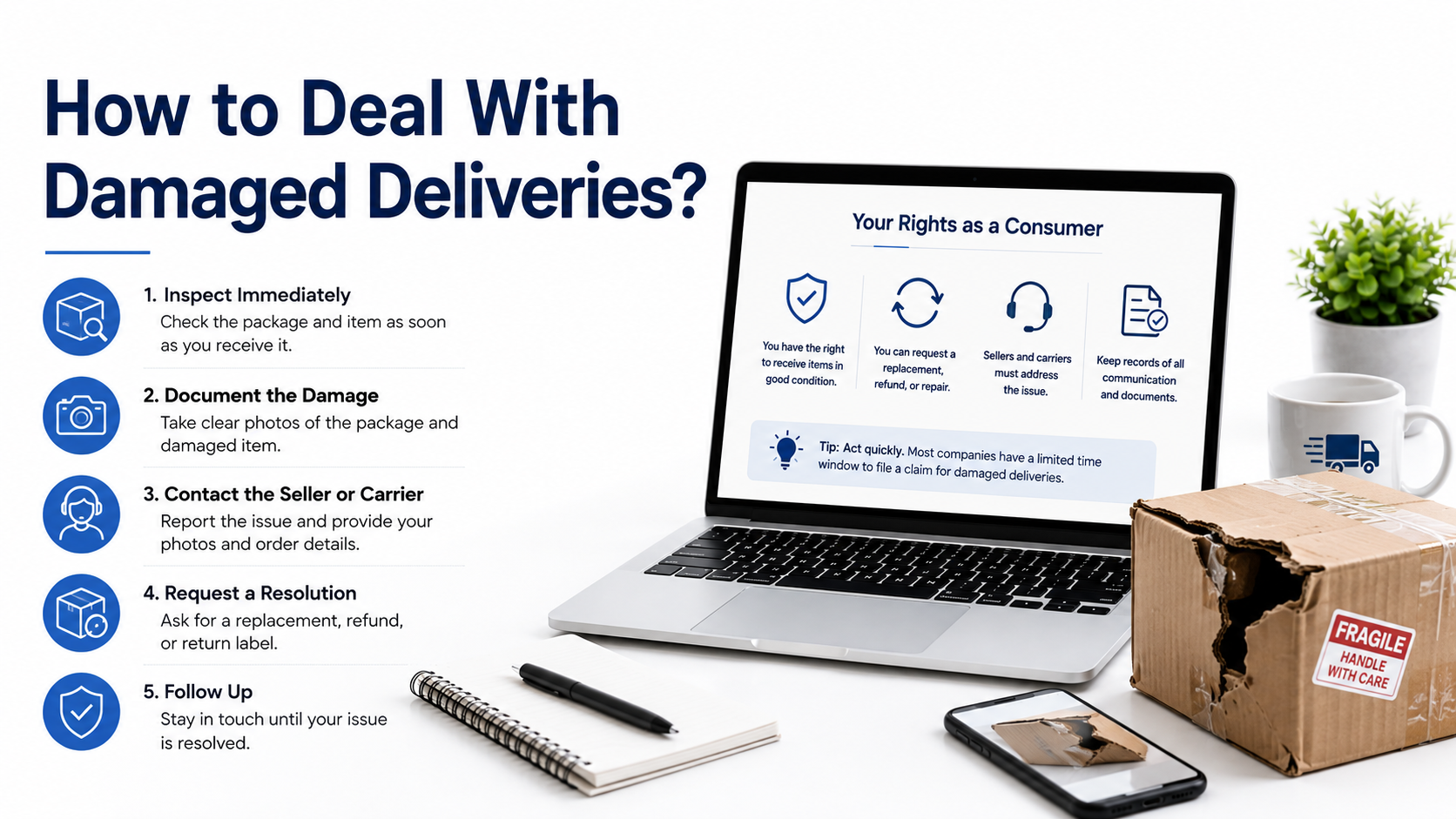
A clear, step-by-step response gives a damaged delivery the best chance of a fast resolution.
Step 1: Inspect the Package Immediately
Examine the package before disposing of any packaging material, checking both the exterior and the contents for damage. Doing this at the doorstep or as soon as the box comes inside, rather than days later, gives an accurate picture of the item's condition on arrival and rules out damage that could occur afterward.
Step 2: Take Clear Photos and Videos
Photograph the damage from multiple angles before moving or discarding anything. Useful images include:
- The outer packaging, showing dents, tears, or crushing
- The shipping label, including the tracking number and address
- The damaged product itself, from more than one angle
- The internal packaging, including any padding or inserts
- Missing accessories, or the empty space where they should be
Photographic evidence gives the seller a clear picture of the problem and cuts down on back-and-forth over what went wrong. A short video showing the unboxing process can add further support, particularly for high-value items.
Step 3: Keep the Original Packaging
Hold onto the box, packing materials, and any inserts until the issue is resolved. Packaging may be required for:
- Returns, since many retailers ask for the item back in its original box
- Insurance claims, particularly with couriers offering shipping insurance
- Courier investigations, where the delivery company examines the packaging to determine what happened in transit
Discarding the packaging too early can slow down a claim or, in some cases, disqualify it altogether.
Step 4: Contact the Seller
Report the issue promptly, describing the damage in plain terms and referencing the order number and delivery date. Attach the photos and video collected earlier. Request a replacement or refund, and note the preferred outcome. Staying professional and factual throughout the exchange tends to produce a faster response, since most customer service teams work through requests according to how clearly they're documented.
Step 5: Contact the Delivery Company (If Appropriate)
Certain situations call for contacting the courier directly, alongside notifying the seller. This applies especially when the delivery company caused visible damage to the box itself, when a shipping insurance claim needs filing, or when the seller directs the buyer to work with the carrier for a resolution. Provide the tracking number, photos, and a description of the damage when reaching out.
Step 6: Follow Up if the Issue Is Not Resolved
Escalate within the company when the first response fails to resolve the matter, asking to speak with a supervisor or a dedicated claims team. Payment providers, including credit card companies, often offer dispute processes for purchases that arrive damaged and go unresolved by the seller. Filing a formal consumer complaint becomes a reasonable next step when a business stays unresponsive or unwilling to help.
What Evidence Should You Keep?
A strong claim relies on organized documentation. Keep the following on hand:
- Order confirmation
- Invoice
- Payment receipt
- Tracking information
- Photos
- Videos
- Email correspondence
- Chat transcripts
- Delivery confirmation
This documentation builds a clear timeline of the purchase and the damage, and it strengthens any refund or replacement request. Sellers, couriers, and payment providers all tend to move faster when a request arrives with organized proof attached.
Understanding Your Consumer Rights
Consumers who receive damaged deliveries generally have some path toward a resolution, though the exact protections depend on the retailer's policies, the shipping provider's terms, the payment method used, and applicable state and federal law. Common areas of protection include:
- Accurate product delivery: meaning the item received should match the item ordered and described
- Damaged merchandise: which most retailers agree to replace or refund under standard return policies
- Refund requests: often available within a set window after delivery
- Replacement options: offered as an alternative to a refund in many cases
- Credit card protections: including chargeback rights for items that arrive damaged and unresolved
- Online shopping rights: which vary by state and by the platform's own terms of service
Reviewing the specific return and refund policy for a retailer before filing a request, and noting any stated deadlines, helps consumers know what to expect at each stage. This overview describes general practice and does not serve as legal advice.
Common Mistakes Consumers Make
- Throwing away damaged packaging before the claim is resolved
- Waiting too long to report damage, past the retailer's return window
- Failing to take photographs before moving or repacking the item
- Accepting verbal promises only, without written confirmation
- Returning products without documentation, such as an order number or receipt
Avoiding these mistakes preserves options and keeps a claim moving forward instead of stalling.
Tips to Prevent Delivery Problems
- Purchase from reputable retailers with established return policies
- Review return policies before ordering, particularly for fragile items
- Inspect deliveries promptly, ideally the same day
- Save order confirmations and receipts in one place
- Choose tracked shipping when available
- Keep delivery receipts until the return window closes
Comparison Table: Damaged Delivery Scenarios
|
Delivery Problem |
Recommended Action |
|
Broken Product |
Photograph and contact seller |
|
Torn Packaging |
Document before opening |
|
Missing Parts |
Report immediately |
|
Water Damage |
Take photos and preserve packaging |
|
Crushed Box |
Inspect contents before discarding packaging |
|
Wrong Item With Damage |
Contact seller with evidence |
How RaiseAComplaint.com Can Help
RaiseAComplaint.com gives consumers a place to document damaged delivery experiences and describe what happened in detail. Filing a complaint on the platform allows a consumer to raise the issue against a retailer or delivery company and to share the experience publicly for other shoppers researching the same brand. Patterns across multiple complaints can highlight recurring service issues that a single report might not reveal on its own. The platform also encourages constructive communication between consumers and businesses, giving companies visibility into problems and a chance to respond.
Wrapping It Up!
Damaged deliveries are a common part of online shopping, but a clear, documented response gives consumers the best chance of a fast resolution. Inspecting deliveries the moment they arrive, photographing the damage, preserving packaging, and reaching out to the seller promptly all strengthen a claim. Staying organized throughout the process, from the first photo to the final email, makes a real difference when a refund, replacement, or dispute becomes necessary. Consumers who document every step and turn to trusted complaint channels when an issue remains unresolved put themselves in the strongest position to see damaged deliveries resolved fairly.
Frequently Asked Questions
What should I do if my package arrives damaged?
Inspect the package right away, and photograph the box and its contents before moving anything. Contact the seller promptly with the details and photos, and request a replacement or refund. Keep the original packaging and all related documentation until the matter is resolved.
Should I keep the damaged packaging?
Yes, holding onto the original box and packing materials is worthwhile until the claim or return process is complete. Retailers, couriers, and insurance providers sometimes request the packaging to evaluate what happened during shipping, and discarding it early can complicate a claim.
Can I request a replacement instead of a refund?
Many retailers offer both options for a damaged delivery, and the choice usually comes down to personal preference and item availability. Stating a clear preference when first reporting the damage helps the seller process the request faster and reduces confusion later.
How long do I have to report delivery damage?
Reporting windows vary by retailer, though acting within a day or two of delivery generally works best. Some couriers and payment providers apply strict deadlines for claims, so prompt reporting protects more options for a refund, replacement, or dispute.
What evidence should I provide?
Useful evidence includes photos and video of the damage, the shipping label, order confirmation, and any related email or chat correspondence. Providing this documentation upfront speeds up review and reduces the number of follow-up requests from the seller.
Can I dispute the payment if the seller refuses to help?
Many credit card companies and payment platforms offer dispute or chargeback processes for damaged items that go unresolved by the seller. This route typically requires documentation of the damage and a record of the attempt to resolve the issue directly.
Who is responsible for shipping damage?
Responsibility often depends on the shipping terms of the purchase, the retailer's policies, and the carrier involved. Sellers generally handle initial complaints and coordinate with couriers, and shipping insurance, when purchased, may bring the carrier's claims process into play as well.
Where can I file a complaint about damaged deliveries?
Consumers can file a complaint directly with the retailer or delivery company, and platforms such as RaiseAComplaint.com offer an additional channel for documenting the experience and raising visibility around unresolved issues.