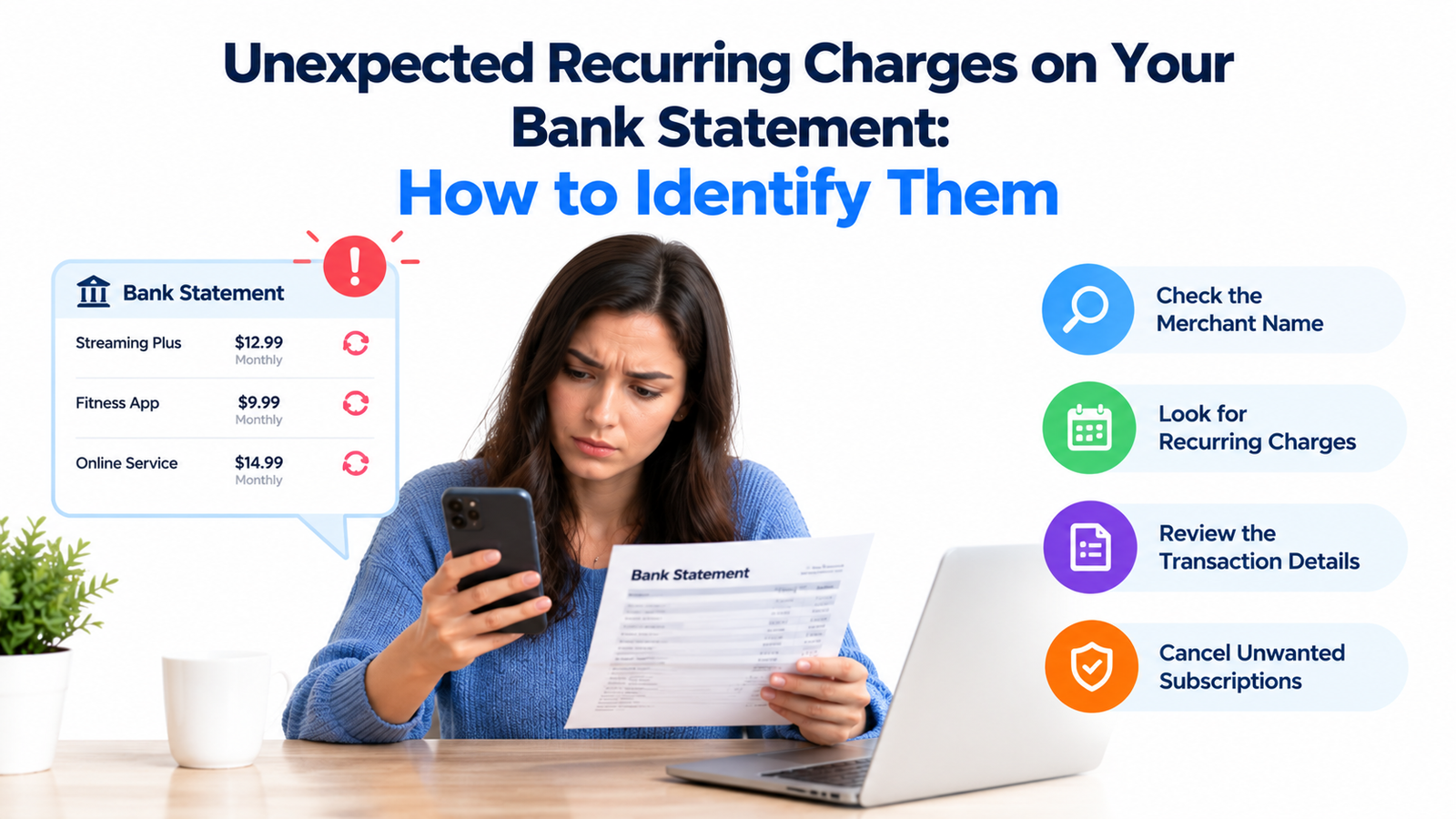
An unfamiliar payment appears on your checking account statement, then shows up again a month later. You do not remember signing up for anything, and the merchant name does not ring a bell. If you notice unexpected recurring charges on bank statement, the first step is to find out who is collecting the money before deciding whether to cancel a service, challenge a billing error, or report a potentially unauthorized transaction.
Why Am I Being Charged for Something I Don't Recognize?
Not every unfamiliar payment means someone has accessed your account. A forgotten free trial, an annual membership, or a digital purchase can continue generating charges long after you stop using the service.
Some companies also bill customers under a parent company's name or through a payment processor. A streaming service, for example, may appear under a corporate billing name rather than its familiar brand. Checking the transaction details can help explain unexplained charges on bank account records without assuming fraud immediately.
Other possibilities deserve closer attention:
- A free trial converted into a paid subscription.
- A membership renewed automatically.
- A family member used a shared debit card.
- A merchant charged the wrong amount or billed twice.
- Someone used your payment information without permission.
Review the amount, date, and merchant description before drawing a conclusion about recurring charges on bank statement entries.
How Can I Identify the Source of an Unknown Transaction?
Start with the transaction itself. Open your bank's mobile app or online account and select the unfamiliar payment. Check whether additional merchant details, a phone number, or a transaction reference are available.
Use these steps to investigate unknown transactions on bank statement records.
- Compare previous transactions. Look back at least a few months. Similar amounts appearing at regular intervals may indicate a membership, installment, or other scheduled payment.
- Search the merchant name. Enter the exact billing description into a search engine. Check whether it belongs to a recognizable company or payment processor. Avoid clicking suspicious links in unsolicited messages.
- Search your email. Look for receipts, welcome messages, trial confirmations, renewal notices, and cancellation emails. Search by the transaction amount, merchant name, and approximate date.
- Check your purchase history. Review relevant app-store accounts, online shopping accounts, and digital wallets. A purchase might have been made through a platform rather than directly through the service provider.
- Contact the merchant if necessary. Use contact information from its verified website or your original receipt. Ask what the charge covers, when the subscription began, and which account it relates to.
These checks offer a practical way to how to identify recurring charges without immediately canceling a payment you might need.
Where Can I Find Subscriptions I Have Forgotten About?
Subscriptions are easy to overlook when they cost only a few dollars each month. A small fee may seem insignificant, but several unused services can create a noticeable deduction over time.
To learn how to find unwanted subscriptions, check the places where you normally purchase digital services and memberships.
- Apple and Google accounts: Review subscription settings and purchase histories for services billed through those platforms.
- Streaming and software accounts: Check renewal dates, saved payment methods, and membership status.
- Shopping memberships: Look for annual plans, delivery memberships, and paid account upgrades.
- Email inboxes: Search for terms such as "renewal," "subscription," "trial," and "receipt."
- Bank statements: Compare repeated transactions to identify payments that do not appear in your subscription lists.
Remember that an app-store dashboard will not necessarily show subscriptions purchased directly from a company's website. If an unfamiliar charges on debit card entry remains unexplained, compare it with the original merchant's billing records before deciding what to do.
What Should I Do About Unauthorized Recurring Payments?
If the transaction appears unauthorized, contact your bank promptly using the phone number on your card or the bank's official website. Explain which payment you do not recognize, when it occurred, and whether similar transactions have appeared before.
For suspected unauthorised recurring payments, take these precautions:
- Ask your bank how to report the transaction and open a dispute.
- Check whether your debit card or account information may have been compromised.
- Ask whether the card should be locked or replaced.
- Find out whether the bank can block further payments from the merchant.
- Save statements, transaction references, emails, and any communication with the company.
The process for how to dispute unauthorised bank charges depends on the type of transaction and your bank's procedures. Report suspected fraud quickly rather than waiting for the next statement. In the United States, federal protections and reporting rules can differ depending on whether a transaction involved a debit card, an electronic fund transfer, or another payment method.
If you recognize the company but disagree with its billing, contact the merchant as well. A subscription renewal you originally authorized may require a different approach from a payment you never approved.
How Do I Stop Recurring Payments?
Once you identify the source, decide whether you want to keep the service, cancel it, or challenge the transaction.
For how to stop recurring payments, begin by canceling the subscription through the provider or platform where you purchased it. Follow the stated cancellation process, save the confirmation, and check your next statement to see whether billing has stopped. How can you spot fake customer support numbers
If the company continues charging you after cancellation, contact it with your cancellation date and confirmation number. If the payment appears unauthorized or the merchant will not resolve an improper charge, ask your bank about its dispute process and available payment-blocking options.
To address unexpected bank account deductions, keep a record of the merchant, amount, cancellation date, and any case reference. These details make it easier to explain the problem if another payment appears.
You can also review other recurring automatic payments, including gym memberships, donations, insurance premiums, and utility bills. Confirm which payments are necessary before blocking them, since stopping a transaction does not necessarily end the contract or erase an outstanding balance.
Taking steps to stop unwanted automatic payments can prevent further deductions, but the right procedure depends on how the payment was authorized and processed. Scam Warning Signs Every Consumer Should Recognize
An unfamiliar recurring payment is a reason to investigate, not automatically a reason to panic. Identify the merchant, check your purchase history, and determine whether the transaction was authorized. If it was not, report it promptly and keep records of every step you take.
Frequently Asked Questions
Why does my bank statement show a recurring charge I don't recognize?
The payment could come from an old subscription, a free trial that converted into a paid plan, a shared account, or a merchant using a different billing name. Compare earlier transactions and search your email for receipts. If you cannot identify the payment, contact your bank.
Can my bank stop a recurring debit card payment?
Your bank may offer ways to block certain future payments, but available options depend on the payment method and circumstances. Contact the bank directly and explain the situation. You may also need to cancel the subscription with the merchant to end the underlying agreement.
Will I get my money back for an unauthorized bank charge?
A refund is not guaranteed. Your bank will review the circumstances, applicable rules, and evidence before deciding the claim. Report the transaction promptly, provide the requested details, and retain copies of relevant records and correspondence.
What if a subscription keeps charging me after cancellation?
Contact the merchant with proof of cancellation and request a correction. Keep the confirmation email and transaction records. If the charge continues or appears improper, contact your bank to ask about disputing the payment and preventing further deductions.